Fork in the River
All writing is done without AI.
Nature stormed into my dreams like the strong Kansas winds I was surrounded by day after day. Relentless, howling, impossible to ignore, and carrying all the information I wasn’t ready to hear, in my dreams or in my life.
Hindsight is a tool of the future, never quite accessible — until it is. My memories visit me in fragments, not whole, slippery in context, hurtful in journals, yet full of retrospective clarity, like a time capsule I can’t open for a certain number of years. A metaphorical canister buried in the Kansas dirt, amongst tornadoes and lies.
They feel pitiful, my memories. They exist, in journals, and in letters, but the tornado dreams, they were special. I almost miss them. The crisp smell of wind-driven wild sage and tumbled dirt become pungent in my memory. Yet, I am safe and cocooned in my Colorado bed, and nowhere near a Kansas tornado, or the events that brought them to me.
In 2002, five years before an F5 decimated Greensburg, Kansas, 30 miles west of Pratt, we had our own F2/F3, which destroyed 14 homes and damaged 230 more. Eighteen tornadoes roared through Kansas that night.
Pratt is a rural town about 80 miles west of Wichita, open and sparse, in people and culture. I half-expected Old West gunfights on the empty streets. It felt lonely and surreal, as if I was living someone else’s life — as the second wife of a farm boy and not a Kansas native, basically the same thing.
The farmer-slash-landlord stood in his blue tick overalls and a co-op baseball cap, and quoted me $350 a month, plus utilities. I almost fell over with gratitude. I was a lowly reporter on a three-times-a-week newspaper and my husband was a new full-time National Guardsman. The late 1800s farmhouse even had a basement for tornado protection.
How lucky were we?
In spite of the cut hedge pole in the basement that helped hold up the kitchen floor, I loved that house and it loved me.
The pink dogwood presented itself on the south side of the house, soft pink blooms visible through the kitchen window in the spring. The gentle color and beauty reminded me to keep going. As a California native, Central Coast to be exact, our weather was sunny and sunnier, unless it was foggy or raining. That was the extent of our seasons. I was still learning to understand the weather changes of the Midwest and spring was winning. You can tell when a large rain or snow storm was gathering as the cattle will bunch up in a tight group. They walk as far as they can get in a pasture until the fence stops them and then they huddle together for warmth. If you drive by a pasture and you see 60 head nose to tail, in a circle, look at the sky.
The way the clouds would move in, within seconds to minutes, not hours, always surprised me, even after years of living there. The sky darkened in seconds, like a huge blanket thrown over a standing lamp in a living room. Weather warnings would start going off on the radio or the TV, whichever was on at the time. The siren wails, alerting us across the miles in small towns that a tornado was on the ground, instilled a level of fear and worry in me that has remained unmatched.
The day before the tornado hit, my daughters and I walked along the creek out back. Cottonwoods cast a shade on the water. The massive trees seemed to lean into their reflections; their branches angled just right for a tire swing over the creek. Next time, I told myself, I’ll drive down here with the truck and hustle up a swing for the girls. The low water bridge is two creek bends from the house. My daughters and I followed the water, kicking up the prairie sage — Artemisia — and its sharp scent as we went. It’s the same clean bite I knew in Atascadero from California sagebrush, Artemisia californica.
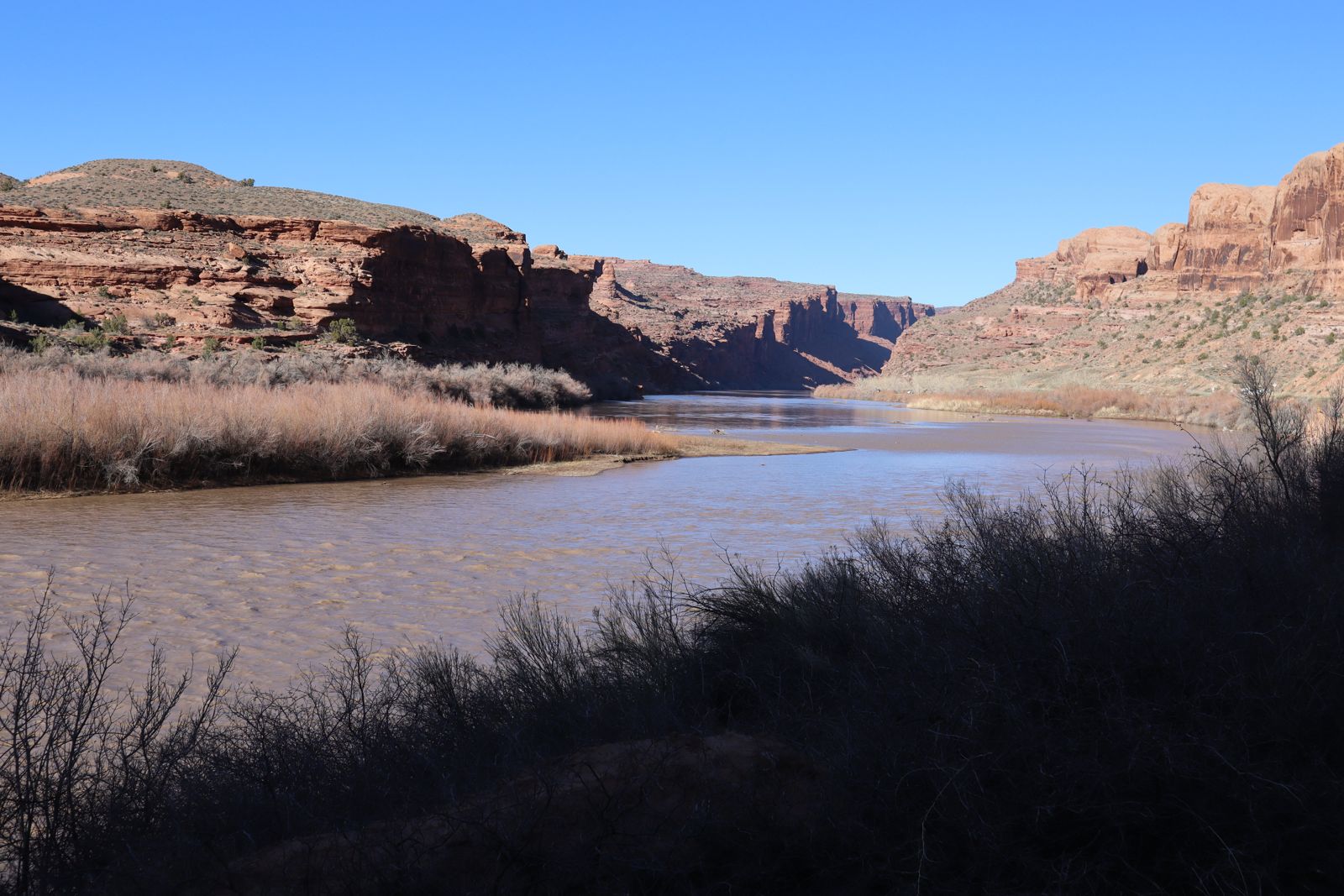
We walked on a thin path, the girls with their tadpole buckets, and me with my camera. The unnamed tributary feeds the South Fork Ninnescah, water that will meet the Arkansas River. In the shallows, I showed my girls the darters that sit like little commas on the sand, then skim away — two beats and they’re gone.
I told my girls stories of how I used to catch tadpoles at the creek at my aunt’s house in Garden Farms, California. I explained how the tadpoles were going to grow legs and heads and become frogs. They looked at me with big eyes, wanting to believe me but being unsure if I was pulling their leg.
Watching translucent tadpoles grow into frogs has always amazed me. They grow actual legs and bodies from a teardrop of being. They go through a complete transformation, living in water, to breathing air and surviving outside the environment they start in, and they do it without effort. They don’t overthink growth like we humans do, they follow what nature gave them to exist. It’s a state of being I’d never learned. I’ve never trusted the process of becoming something different. Someone who needed to outgrow old environments. Someone who needed to learn to breathe outside the water.
The thought was similar to how my own tadpole daughters were turning into young ladies with whole personalities. I realize now that I never thought of myself in that gestational period. I never considered whether I was growing or stagnant. I never applied nature to my own growth, and I wish I had. Today, I talk to trees, but back then I looked at trees as things, not as beings. Not as sentient. I created a river in my children’s lives, but no one had ever created one for me.
The farmer told me Native Americans claimed that our small farmhouse, being at the fork of two rivers, would save us in a tornado. They alleged that tornadoes got to the fork of the river and would redirect by some magical law of nature. And that is how our cute little rental was still standing.
As a graduate student, it was a cute story. I knew a thing or two about the area’s indigenous people, and even though I wanted the tall tale to be true, I doubted it. The Kanza, Osage, Pawnee, and Comanche used to populate the area. In fact, the Kanza, known as the “Wind People” or “People of the South Wind,” inspired the Kansas state name.
First Nations lived in symbiosis with the weather. They knew when to hide, when to run, when to relax, and when to move on. The Kanza peoples lived by the seasons, honoring the danger and following ancient migration paths northward. In doing so, they managed to avoid the blistering heat and the deadly twisters. Today, humans not only stay in the same areas, they rebuild and act surprised when they get hit again.
I’d often walked out to scan the sky, wondering what signs they would have paid attention to, which clouds meant danger, which wind changes meant storms. I’d learned to smell when rain was coming, but that was the extent of my pioneer abilities. The river fed and cared for everything around it, the animals, the fish, the tribes, the birds, the buffalo, everything. And now here I am, wondering if it holds magical tornado deflection powers. I chuckled to myself — it doesn’t. The river is a mother, like me. It will do its best, but at some point, it’s just a river, like I’m just a mom. I wish I had more magical powers and if the river could divert tornadoes, I’m sure it would.
How simple it would be, to be a river, never rejected, only loved.
Rivers are like the kitchen table in a mom’s home, everyone comes to visit for a drink, to find food, to relax, to gather, to play in the coolness of the currents. How simple it would be to be a river, never rejected, only loved. We take them for granted though, don’t we? We assume they will always flow. Only when they run low on water do we realize how much we’ve been pulling from them all along. Pulling the very blood the river needs to survive into our survival, dismissing the toll it takes.
Tornado day started like most, drop the girls off at daycare and school and get to my job at the Kansas Social Services office. It was not my dream job by any measure. I’d actually given up my dream job, editing the Lifestyle page at the three-days-a-week local newspaper for a whopping $2 more an hour. Those were the days before coffee runs and social media chatter, when we subsisted on drip coffee and talked to our co-workers.
We were released from work early that day with a side note to, “Hunker down.” I hopped into my Ford Taurus, with one missing hubcap, and turned up the volume on my clunky, but portable, black weather forecasting radio from Radio Shack. A hundred dollars of, “Wasted grocery money,” according to my husband.
After gathering my girls from daycare and Catholic school, we jumped from the car and rushed into the house, the rain already creating puddles and splashing our feet.
The weatherman’s robotic voice, always exact, never faltering, had been droning for 36 hours — since Monday, warning of atmospheric conditions, ripe for tornadoes across Kansas — and today, it was coalescing. Something about conflicting air masses and wind shear, which I didn’t understand, but what I did understand was that my husband was TDY — again — his handwritten schedule held to the fridge with a horse head magnet: “Out on Sunday and back Thursday night.”
Today was only Tuesday. I grabbed the receiver on the wall phone and pushed the numbers for his unit.
“This is the 42nd, Sergeant Ramos speaking, how may I assist you?”
“Hey Sergeant, I was hoping you could contact my husband, this is Mary. I’m not sure where the exercise is, I was hoping somewhat close . . .”
“Mary?” Sergeant Ramos hesitated. “Yes, I remember you, I’m drawing a blank on why you think your husband is here or in the field?”
Now I hesitated and looked at the fridge again, “He’s not home . . .” I looked down at my feet, my face getting hot, “I may have read his schedule wrong and there’s a storm coming.”
“Yeah, I’m opening the Armory now, for the town shelter. Do you have a basement? Do you need to come in? I could send someone to help you,” he rushed his words, uncomfortable. The sounds of people and kids gathering at the Armory wafted through the phone.
“No, that’s very kind. No,” I tilted my head downward, humiliated. “Thank you for your honesty, Sergeant.”
I hung up the phone. The tears were instant. I did welcome his honesty, most of the military members I’d known for the last eight years would have lied for him, many already had.
“Mom . . .”
My oldest pulled on my hoodie, her arms full of stuffed animals and Breyer horses she couldn’t leave alone. The tears would wait. They always did.
I was responsible for our two children, three horses, the chickens, the goats, hail that could total our vehicles, and prepping the basement for action. If the weatherman was right, this would be the biggest storm of my life.
The irony of that time is that tornadoes had been stalking me for years in my dreams. As if the weather itself had marked me, a mirror of the chaos I was living. The winds ripped through my dreams as vortexes, dozens of them a night, slipping down in wild abandon from the darkest of clouds, silhouetted against the waning dusky sky to the ground. They were always headed right for my house in my dreams and I always had to go through a maze of doors that were too small to get through without a ridiculous amount of effort, stairs that moved from almost close, then far away, to almost close, then far away, and booby traps that changed in complexity from dream to dream to finally get to the safety of basements.
Once in the safety of the basement, my dreamland was horrifying. The roar of the winds rose to levels more than the sound of a train. It was the sound of the sky collapsing and everything getting destroyed at once.
In one particular recurring dream, my horse Smiley’s head would come busting through the basement window at the top of the wall, all black mane and dun colored face, screaming in terror, jammed through a four-foot-by-four-foot window. The tornado swirled around her, just on the outskirts of the window, with the chaos of loss and everything I had to protect, but couldn’t. The sound of her pain would wake me, covered in sweat, reaching for a husband, hitting sheets and air.
The dreams were a warning. I was smart enough to know that, but I had shut down my intuition at such a young age, shamed for being smart, shuttled to the side for being annoying, that I rarely listened to myself, or my gut. The tornadoes were almost like very scary friends, telling me to listen, to act, to wake up. I can look back now and think kindly of the terrifying vortexes that came to visit on a regular basis. They would show up like scary old grandmothers with fangs, “You aren’t safe, and if you aren’t safe, your babies aren’t safe either.”
I was an accessory for my husband, a weight he needed but never wanted. Unlike responding to tornadoes, my bigger issue was that I allowed the danger to continue. I hid behind the mom card, filling my days and nights being everything to them and nothing to myself. We all know that’s not a balanced life.
The correlations between weather dreams and the upheaval and dysfunction in our lives, such as our second child’s diagnosis of Rheumatoid Arthritis, were not lost on me. What could I do? My hands smelled like horse sweat and laundry soap. I was balancing a tightrope of responsibilities that would creep into my dream world, throwing warnings at me like the hands of my junior high bully, Michelle. I had children, animals, bills, college, a stepchild. I had responsibilities that overshadowed the betrayals. Hurt feelings need the luxury of time I did not have.
When my second daughter was born, we co-slept. Having her next to me was how I realized she wasn’t only having night terrors — she would stop breathing, then gasp, as if surfacing from underwater and gulping in air. It’s also how I felt the heat from her small joints on my back, inflamed and painful, full of Rheumatoid Arthritis. Discovering her pain this way didn’t create my tornado dreams, but it matched the fear I felt at her condition.
Naïve in my loneliness — I tried so hard to hold everyone and everything together, my small family in our small farmhouse in our small town. A fragile microcosm of love I kept hammering at, even as it refused to take the shape I craved.
I threw my shoulders back, standing tall . . . bring on the tornado prep. We had a long night ahead of us. As the girls collected what they wanted to take to the basement in their mini go-bags, I dragged the “tornado” mattress to the basement. I filled four gallons of empty milk jugs with water, collected extra batteries for the flashlight and the radio, grabbed more stuffed animals, a coloring book, crayons, homemade cookies and banana bread wrapped in plastic. I grabbed the dogs, found the cats, and attached I.D. tags to each horse’s halter. The horses already had their asses to the wind. They rejected their lean-to and picked a corner of the tree shelter-belt that kept the most rain off of them.
I distracted the girls, while the storm built in intensity. We colored and sang songs until the roar drowned out our voices. We huddled under the mattress, each of our arms around a dog.
The robotic voice crackled through static, “Tornado warning for Pratt County until 8 PM; Doppler radar indicates a large tornado on the ground, moving northeast at 25 miles per hour; Mobile homes destroyed; Persons in mobile homes should move immediately to a sturdy shelter; This is a life-threatening storm; Stay away from windows . . .” I dropped the radio so I could grab the mattress with both hands, pulling it down onto us.
The tornado was almost 2,000 feet wide and destroying ground at an estimated 150 miles-per-hour. I hoped the farmer had been right about the fork of the river. As a California native, I knew what to do when the earth moved, but I had no idea what to do when the sky falls. I struggled not to cry and kept my hands full and busy, so they could not see the shaking. My throat ached with swallowed fear. I prayed enough in one night to fill six years of Sundays.
The storm passed. I spent a month digging debris out of the trees, bushes, and small pasture. The horses wondered — I’m sure — where exactly I had moved them to.
Why did I stay in a broken relationship? That’s the question everyone asks. I wanted my children to have what I did not: a dad. I needed to shower them in a love that I dreamed of as a child. I wanted my life to work, and I needed to find the magic combination. Every young mother tells herself this, and I’m sure more than a few young fathers. But we can’t change others.
There’s an old saying about polishing stones — if there wasn’t a gem under there the whole time, you’re exerting effort that won’t pay off. I could polish that stone the rest of my life, and I tried, but it didn’t make it shine. I polished situations to my own detriment. I gas lit myself into believing that his bad behaviors were somehow mine to fix. Looking back now, the tornadoes were there to warn me in ways I wasn’t strong enough to hear. Nature doesn’t have to lie, it reacts, it exists, it’s in the now of everyday, but us humans, we’re so caught up in everything except the stark reality of now, we exhaust ourselves. I had hoped, cried, cajoled, pleaded to the universe to fix my life into what I had dreamed of as a child, lost in books and hope, but the reality is that I failed. I could not fix a two-person marriage alone. I hadn’t read the signs.
In nature, the signs are lightning — beware! Or rain that turns into flash floods, or winds that turn into hurricanes and tornadoes. With nature we have a congruence that we can plan on, or at the very least, be aware that it only has so many ways to go. With humans though, we can’t count on congruence or even consistency. Humans say one thing and do something completely different. Humans have the ability to lie with conviction, often looking you straight in the eye while you miss the storm.
Now, decades later, when the Colorado wind shifts and carries the dry scent of sage and soil, my chest churns with the tug of old storms. I live alone, in peace, able to watch the skies from my plot of land and welcome the rising winds, the sharp slap of the first rain to fall, and feel grateful for what the tornadoes were able to teach me about being aware, but also about being in the moment. I can’t predict which storms will challenge me and which will teach me.
The farmer was right, but the fork in the river was me. I could see the storms coming and redirect them, or I could stand there and let them take me out. I did both, and when I was stronger and my babies were older, I chose to venture onto the fork I was too scared to take before. My strength allowed me to break free, from everything. I look out toward Pikes Peak on this beautiful September night and I wish I could go back and tell that girl, the mom, standing at the low water bridge that she’s a tadpole and she hasn’t even begun to develop, but she will. She will.